How to Care for Your Implants for Your Implant Supported Dentures

There is no question that implant supported dentures have a lot to offer. For qualifying individuals, these dentures look and feel amazing. In fact, these also function like normal teeth. Other than avoiding sticky foods, people can eat just about anything. Compared to a traditional appliance, the implant version makes more sense.
What are implant supported dentures?
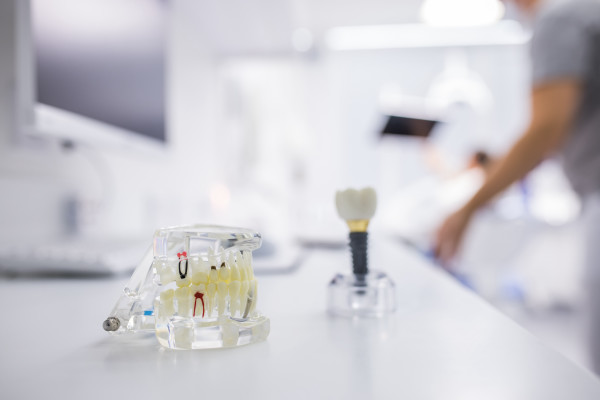
Implant supported dentures consist of two, sometimes more, components. First, are the titanium screws. A dentist inserts these into the jawbone of the patient. Once fusing and healing occur, the patient receives the actual dentures. In some instances, dental professionals use clips for added support. Regardless, the process is relatively simple and virtually painless.
Different types
There are two categories for implant supported dentures. These include removable and permanent. For the removable ones, the individual takes the dentures out at night for cleaning. When done, the dentures snap back into place. In comparison, the permanent ones stay put at all times. Within these categories are different types of implant supported dentures.
As an example, if someone is missing just one or two teeth, the dentist would opt for a single-tooth implant. However, for those missing multiple teeth or an entire mouthful, the dental professional would take a different route. In this case, the solution would be implant-anchored dentures. Either way, patients once again have beautiful smiles and fully functioning teeth.
Proper care
A patient can choose between removable and permanent implant supported dentures. Regardless, proper care and maintenance are essential. For one thing, it is imperative to brush after every meal. Also, dental professionals recommend using a fluoride mouthwash. The goal is to keep both the dentures and implants clean.
Remember, the implants are the titanium screws the dentist inserts in the jawbone. Without proper care, an individual could develop soreness and swelling. Even worse, a person could end up with an infection. Along with brushing, people with implant supported dentures can use a waterpik. That works great to remove any food particles close to the gumline.
For someone to qualify to receive implant supported dentures, they must be able to follow aftercare instructions. This is why most dentists will not approve people with a drug or alcohol abuse problem. The decision has nothing to do with these individuals not being deserving. It just means that most of them are incapable of caring for implants and dentures.
Incredible benefits
It takes very little to keep the titanium screws used for implant supported dentures clean. However, patients need to understand how important this is to their overall health. By doing all the right things, these dentures offer many benefits. Again, they look, feel and function as normal teeth. This implant option gives a lift to a person’s self-esteem. This type of denture also prevents embarrassing slippage as seen with conventional dentures.
Beautiful teeth
Regardless of why you have missing teeth, there is no reason to live without them. Instead, you might qualify as a patient for implant supported dentures. By taking proper care of the implants and dentures, these can easily last 30 years or longer. Recapture your beautiful smile. Talk to your dentist today. These dentures are more affordable than you think and well worth the small investment.
Request an appointment here: https://www.mytotaldentistry.com or call McCarthy Dentistry at (740) 546-5178 for an appointment in our Marietta office.
Check out what others are saying about our services on Yelp: Read our Yelp reviews.
Recent Posts
Selecting a skilled implant dentist is crucial if you need dental implants. Skilled implant dentists have specialized skills. These dentists also have experience beyond general dental care. When you visit a skilled implant dentist, you have a good chance at a lasting outcome.Implant dentistry is more extensive than foundation dental education. Implant dentists must train…
An implant dentist will consult on options to replace your missing teeth. While a great many dental problems can be patched with veneers or repaired with crowns, sometimes the tooth cannot be saved. In these situations, the remains of the tooth must be entirely removed. The resultant gap can compromise chewing and damage the patient's…
Implants are a common, popular, and permanent solution that an implant dentist will use to replace missing teeth. Where a tooth cannot be saved with a veneer or crown, implants replace the tooth entirely. The implant is a realistic-looking false tooth that is firmly anchored in the jawbone. With proper care, implants can last for…
Your implant dentist has already placed your brand-new dental restorations. The osseointegration was successful. Your healing is going well. The abutment and crowns are now in place. It is time to hand over the reins of recovery to your dentist. The following outlines the ways your general dentist can continue your implant maintenance.The implant dentist…