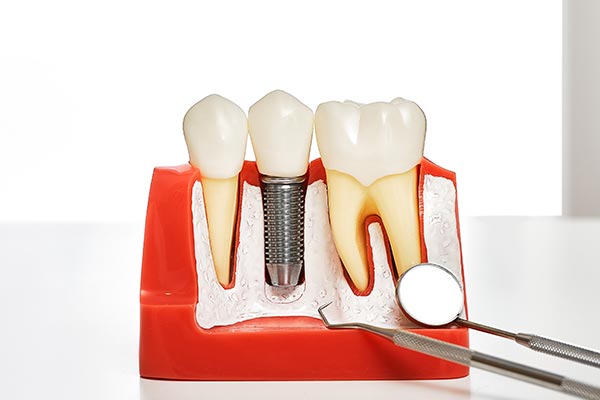
Choosing to invest in dental implants is no minor decision. The procedure requires small surgeries, and the overall process can last months, requiring dedication to restoring oral health and a full smile. The results, however, are well worth the time and effort for most patients.
Before deciding to commit, patients first need to understand the different options for implants and what each specifically addresses in the mouth. While implants are mainly used to replace missing teeth, some persons may benefit from single implants while others do better with implant-retained dentures. The main forms of implants can be separated into two basic types, followed by three different kinds of possible appliances.
Two basic types
The most critical factor in receiving dental implants lies in the jawbone. If someone has a weaker jawbone that is not healthy enough to withstand the surgery and pressure involved with implants, then another implant-like option may need to be considered.
Endosteal
An endosteal implant is the most common type of procedure. The process involves drilling holes for the implant into the patient’s jawbone and inserting metal posts. The bone must then heal completely around the post, creating a functional connection with it to mimic a natural tooth root. For this procedure to succeed, the jawbone must be robust and capable of complete healing.
Subperiosteal
Even after bone grafting, some patients do not have the structural thickness or strength in the jawbone to support endosteal implants. Instead, these individuals can receive subperiosteal implants. In these cases, the metal posts are secured within the gums but on top of the bone.
Three main endosteal implants
Patients go through a number of exams and assessments to make sure the jawbone can undergo surgery without adverse effects. Once candidacy is confirmed, there are three options to consider. The one a patient chooses mainly depends on how many teeth are missing in the mouth.
Single implant
As it implies, single dental implants replace one missing tooth. The gap may be anywhere in the mouth, and one post is secured in the place of the former natural root. Once the jawbone has healed from the placement and bonded to the post, an abutment is attached above the gumline. Lastly, the crown is secured to the abutment, and the gap is filled.
Bridge implant
Implant-supported bridges are necessary when a patient is missing a number of teeth in a row. Instead of drilling many holes in the jawbone for numerous implants, only two implants are placed at each end of the row. The crowns attached to those implants can then support a dental bridge that fills in all the gaps.
Denture implant
An implant-retained denture is for someone missing most teeth. Several implants are secured throughout the mouth, and a full denture is attached to them. This denture can be removable or permanent.
Conclusion
Obtaining an assessment of oral health and missing teeth from a dentist can guide a patient toward a specific implant type. Knowing that another implant option exists provides an alternative for patients who do not have a strong jawbone.
Request an appointment or call McCarthy Dentistry at 740-546-5178 for an appointment in our Marietta office.
Recent Posts
A dental implant procedure is a structured, multi-stage process that replaces missing teeth with a stable, long-lasting solution. If you are exploring tooth replacement options, you may be curious about what this process is like from start to finish. Having a thorough understanding of each phase helps set realistic expectations and reduce uncertainty about the…
Seeking a secure, natural-looking way to replace missing teeth often leads individuals to explore dental implants. This modern solution places a titanium post in the jawbone, topped by a lifelike crown, and can offer stability and reliability. However, ensuring that implants heal successfully involves paying close attention to food choices, especially in the days and…
Dental implants provide a long-lasting solution for missing teeth, offering functional and aesthetic benefits. Whether replacing a single tooth or supporting a full arch, dental implants help restore confidence and improve oral health. Understanding the essential facts about this treatment can help patients make informed decisions.Dental implants look, feel, and function like natural teeth. The…