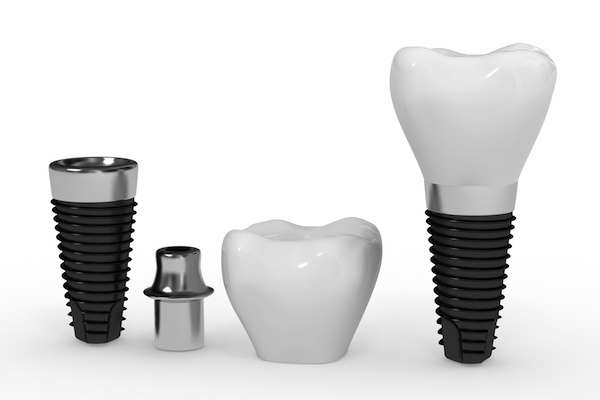
Standard dental implants can restore the function of missing teeth and preserve the jawbone. The three major components of implants closely mimic natural teeth and with proper care, these implants can last a lifetime, making them a popular choice among dentists and patients.
Understanding the structure of dental implants
Natural teeth are rigid, calcified structures that protrude past the gum line and attach to the jawbone with roots. Dental implants consist of three main parts that duplicate these functions:
The post
The first and most vital step of the implant procedure is the surgical placement of a titanium or zirconium post in the form of a screw or cylinder, inserted where a tooth's natural root once existed. The metals used for posts are durable and well-tolerated by the human body. After a post is placed in the jaw, it begins to fuse with the surrounding bone to create a sturdy foundation for the prosthetic tooth it will later support. This process is called osseointegration and can take three to six months.
The abutment
Once the dentist is confident that the post has successfully fused with the jaw, the abutment is attached. The dentist makes a small incision that reveals the post's head, onto which the abutment is placed to connect the prosthetic tooth with the post. Abutments also consist of titanium or tooth-colored zirconium. The healing period for this portion of the procedure lasts up to six weeks. Although the abutment has no anatomical equivalent, it is essential to ensure the attachment of the prosthetic teeth to dental implants.
The crown
The final stage of the dental implant process involves the placement of the prosthetic tooth or crown. Crowns can be made of resin, porcelain, or metal, and they attach to the abutment with cement or screws.
Crowns cemented to the abutment are very secure and will not become displaced, but using too much cement when positioning them can cause seepage under the gum line, leading to infection. This adhesive can also cause an allergic reaction with some patients. Crowns held in place with cement are challenging to remove if repairs are necessary, but their stability gives patients a high degree of confidence while chewing.
A screw drilled through the crown can also attach the crown to the abutment. This method enables the dentist to remove the crown for cleaning and repair easily, but it can also cause it to loosen while chewing. The dentist can cover the visible screw with a porcelain filling; however, this cannot conceal it entirely. Therefore, screw-retained crowns may be better suited for low-visibility teeth toward the back of the mouth. Ultimately, a dentist will decide how to attach a crown based on the following factors:
- The reaction of the patient’s body to the cement
- The implant’s location in the mouth
- The possibility of the implant supporting a bridge in the future
Conclusion
Dental implants are a comfortable, durable, and uncomplicated solution for restoring the function of single or multiple teeth. With good oral hygiene, all the parts of implants can potentially last a lifetime.
Request an appointment or call McCarthy Dentistry at 740-546-5178 for an appointment in our Marietta office.
Recent Posts
Dental implants can be an effective and aesthetically pleasing long-term solution for missing teeth. However, misconceptions about implants can make some hesitant to consider them. In order to help patients make an informed decision, it helps to dispel some common myths about dental implants.One of the biggest concerns people have about dental implants is pain.…
Dental implants provide a durable and long-lasting solution for missing teeth, but like natural teeth, they can be damaged under certain circumstances. Trauma, excessive pressure, or complications with the surrounding structures may compromise the integrity of an implant. Understanding what to do in the event of damage can help prevent further issues and protect oral…
Dental implants provide a long-term solution for individuals who have lost one or more teeth due to injury, decay, or periodontal disease. These implants act as artificial tooth roots, offering stability and durability similar to natural teeth. In recent years, dental implants have become a preferred option for tooth replacement because they preserve the jawbone…