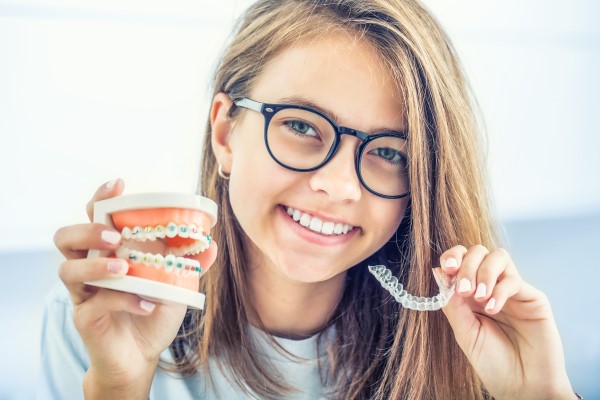
Orthodontics is concerned with realigning the teeth and jaw, such as with braces or aligners. A general dentist can discuss several orthodontic treatments, helping patients explore their options. Learning about what each orthodontic option involves can help patients or their caregivers choose the one best suited to smile goals and lifestyle preferences.
Common orthodontic options
Orthodontic care includes a variety of treatments designed to straighten teeth, correct bite issues, and improve jaw alignment. Each method works differently, but all share the same goal of creating a healthier, more balanced smile. With multiple options available, a general dentist can customize orthodontics to fit the lifestyle and preferences of each patient.
Despite common misconception, orthodontics is not limited to children or teens. Adults are never too old to work toward a straighter, more picture-perfect smile. From traditional braces to clear aligners, modern options make achieving a straighter smile for patients of all ages more accessible than ever before.
Metal braces
Traditional metal braces continue to be one of the most reliable orthodontic options for correcting smile alignment. Made from high-grade stainless steel brackets and wires, they steadily guide teeth into proper position. Their strength makes them especially effective for managing complex bite issues like overbites, underbites, crossbites, and crowding.
Today’s metal braces are designed with greater comfort in mind. The brackets are smaller, less bulky, and more comfortable than in the past, while still delivering excellent treatment outcomes. Patients can also customize their braces with colorful elastic bands for a fun, personalized element to the process.
Discreet types of braces
For patients seeking a less noticeable option, ceramic braces and lingual braces provide effective alternatives. Ceramic braces use tooth-colored or clear brackets that blend more naturally with the smile. They are less visible than traditional metal braces but function in the same way: using wires and brackets to shift teeth into place.
On the other hand, lingual braces sit on the inner side of the teeth, facing the tongue. This positioning makes them practically invisible from the outside, though they may take more time to adjust to in terms of comfort and speech. Although they are less common, lingual braces provide a discreet solution to bite issues without compromising treatment effectiveness.
Clear aligners
Clear aligners are another discreet approach to orthodontics. They are custom-made, removable trays that gradually shift teeth into alignment without the need for brackets or wires. Their nearly invisible appearance and convenience appeal to many adults, teens, and even preteens.
Unlike fixed braces, aligners can be removed for eating, brushing, and flossing. This flexibility supports better oral hygiene during treatment and allows for fewer dietary restrictions. Because of these advantages, many patients find clear aligners to be a comfortable and practical choice.
A general dentist can help patients explore discreet orthodontics if appearance is a primary concern. With the variety of choices now available, orthodontic treatment can be tailored to meet both practical needs and personal preferences.
Other orthodontic treatments
Beyond braces and aligners, orthodontics includes additional treatments that support healthy bite function and jaw alignment. Expanders, for example, are devices used to widen the upper jaw, often in younger patients whose bones are still developing. This can create more space for teeth to align properly and reduce the need for tooth extractions later.
A general dentist may recommend other orthodontic appliances, such as headgear or elastics, to guide jaw growth or correct bite imbalances. These options demonstrate how orthodontics extends beyond straightening teeth to address overall oral harmony. Note that they are typically used in more severe cases.
Retainers are another critical part of orthodontic care. After active treatment ends, retainers keep teeth in their new positions and prevent relapse. Both fixed and removable retainers help maintain treatment results for years to come.
Finding the right approach to orthodontics
Selecting the most suitable orthodontic treatment involves careful evaluation of oral health, lifestyle, and personal goals. The severity of the alignment issue, desired treatment time, and preference for discreet options factor into the decision-making process. For instance, clear aligners may be ideal for those seeking flexibility, while metal braces may be necessary for more complex cases.
No matter the choice, the ultimate goal remains the same: creating a healthy, functional, and confident smile. With so many orthodontic options available, patients can find an approach that fits seamlessly into their daily lives.
Schedule a consultation for more information
Interested in orthodontics? The first step is a consultation to review oral health and treatment goals. With modern braces, aligners, and appliances now more comfortable and discreet, there is no need to put off orthodontics. Contact our Marietta team to schedule a consultation.
Request an appointment here: https://www.mytotaldentistry.com or call McCarthy Dentistry at (740) 546-5178 for an appointment in our Marietta office.
Check out what others are saying about our dental services on Yelp: Orthodontics in Marietta, OH.
Recent Posts
Dental implants can be an effective and aesthetically pleasing long-term solution for missing teeth. However, misconceptions about implants can make some hesitant to consider them. In order to help patients make an informed decision, it helps to dispel some common myths about dental implants.One of the biggest concerns people have about dental implants is pain.…
Dental implants provide a durable and long-lasting solution for missing teeth, but like natural teeth, they can be damaged under certain circumstances. Trauma, excessive pressure, or complications with the surrounding structures may compromise the integrity of an implant. Understanding what to do in the event of damage can help prevent further issues and protect oral…
Finding a reliable, trustworthy kid-friendly dentist in your corner is essential for maintaining a child's oral health and creating a positive dental experience. Parents often have many questions before scheduling a dental visit for their children. The following blog post explores the 10 most common questions parents ask during a visit to a kid-friendly dentist.According…
Dental implants provide a long-term solution for individuals who have lost one or more teeth due to injury, decay, or periodontal disease. These implants act as artificial tooth roots, offering stability and durability similar to natural teeth. In recent years, dental implants have become a preferred option for tooth replacement because they preserve the jawbone…