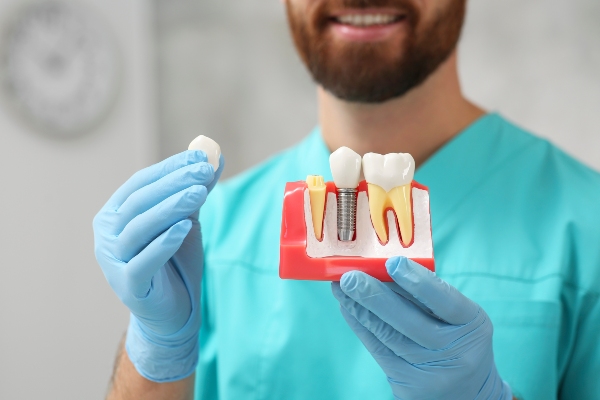
You may have heard a lot about dental implants and how they can change your smile and appearance. Implants have many benefits and offer advantages that other tooth-replacement treatments cannot match. You can expect improved health and wellness when you have implants, as well. One of the most significant differences you will see is in your jaw. Having implants can prevent deterioration and other severe problems with the bone.
How dental implants work
Implants are a permanent way to restore smiles and replace teeth. By wearing implants, the patient can once again bite into most foods and enjoy a well-balanced meal. Implants come in three parts: a titanium post, a smaller piece called an abutment, and a natural-looking crown. Getting implants requires a multi-step process that can take up to eight months or more. Implants are durable and should last for many years if the person takes good care of them and follows the dentist’s maintenance instructions.
How the dentist places the implants
Dental implants not only replace teeth but the root, as well. The dentist will drive the screw-like posts deep into the jawbone to serve as an anchor for the abutment and crown. This allows for a strong bite force. To place the implants, the dentist makes an incision in the gums. After putting the posts in, they fuse to the bone over the next several months. The patient must wait until the process is complete before returning to the office for the next steps.
The problem with bone loss
Many people who suffer tooth loss also experience bone loss in the jaw. Part of the jawbone, called the alveolar bone, supports the teeth. However, when teeth fall out, this bone weakens and deteriorates. Eventually, the entire jawbone can shrink. This changes the shape of the mouth and face. It can become difficult for the individual to chew as bone begins to recede.
Implants to the rescue
Dental implants do much more than just give the person a full smile again. Implants act as the tooth’s root and can also salvage the bone that remains. When a person with implants chews food, that force transfers to the implant. Because it is made of strong titanium, it is capable of withstanding a lot of pressure. With implants, a person can once again eat foods such as meat, bread, and other hard, dense, chewy items.
If the dentist sees that the patient has severe bone loss, a graft may be necessary. The dentist may take bone from another part of the body to do this. Artificial bones are also an option, as are bones from animals. The dentist will do a surgical graft before starting the dental implants procedure.
Aftercare for dental implants
When the patient is ready, going home after the placement of the implants is okay. The patient will need to rest until the anesthetic effects fade. This may take many hours. For patients who get general anesthesia, someone must drive the patient to and from the dental appointment.
Going back to one’s daily routines is possible within the day. Many people go back to work, but one must stay away from stressful and strenuous activities. Working out should be set aside for a while. Light bleeding will happen during the first two days. Biting on some sterile, damp gauze over the implant can put some pressure on the implant, which can help stop bleeding.
The patient must eat soft foods for more than a week after the treatment. Taking over-the-counter pain relievers can help ease the pain. Antibiotics can remove or prevent infections. The dentist will instruct the patient to keep the mouth clean at all times. Rinsing the mouth at least three or four times a day is ideal.
The patient must not wear any dentures that cover the treated area. Using straws will not be good for the stability and healing of the implant. Hot drinks and foods can trigger more bleeding on the first day. Smoking and drinking alcohol are not healthy for one’s healing. These activities for at least a couple of weeks can slow down one’s recovery. The patient must not touch the implant with the tongue and fingers.
New teeth and stronger bones
There is a lot to like about getting dental implants. You can show off a new smile and have good oral health. You can also experience stronger bones and stave off bone loss. If you are interested in getting implants, now is a good time to talk to your dentist. You can determine whether this treatment makes sense for you.
Are you considering dental implants in the Marietta area? Get more information at https://www.mytotaldentistry.com.
Check out what others are saying about our dental services on Yelp: Dental Implants in Marietta, OH.
Recent Posts
Seeking a secure, natural-looking way to replace missing teeth often leads individuals to explore dental implants. This modern solution places a titanium post in the jawbone, topped by a lifelike crown, and can offer stability and reliability. However, ensuring that implants heal successfully involves paying close attention to food choices, especially in the days and…
Dental implants provide a long-lasting solution for missing teeth, offering functional and aesthetic benefits. Whether replacing a single tooth or supporting a full arch, dental implants help restore confidence and improve oral health. Understanding the essential facts about this treatment can help patients make informed decisions.Dental implants look, feel, and function like natural teeth. The…
Dental implants provide a long-term solution for missing teeth, offering functional and aesthetic benefits. Designed to mimic natural teeth, they help restore the ability to chew, speak, and smile with confidence. The process of receiving dental implants involves multiple stages, each essential for ensuring a successful and lasting outcome. Understanding what to expect can help…
Dental implants can be an effective and aesthetically pleasing long-term solution for missing teeth. However, misconceptions about implants can make some hesitant to consider them. In order to help patients make an informed decision, it helps to dispel some common myths about dental implants.One of the biggest concerns people have about dental implants is pain.…