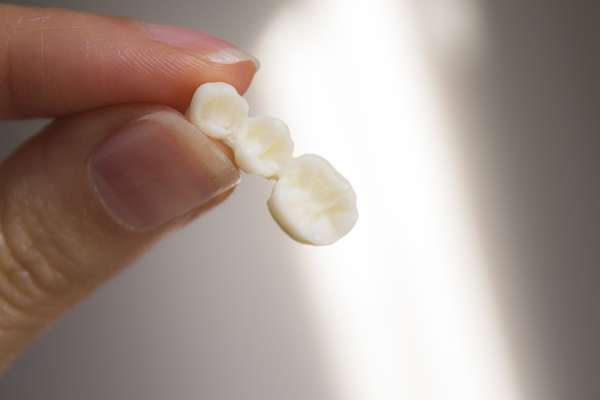
Bridges
A bridge is anchored by the teeth on either side of the gap. Crowns are placed on the supporting teeth, and the false teeth are placed in between these abutments.
Pros
One of the pros of a dental bridge is that the process is less invasive and quicker than getting a dental implant. There is also not a need for adequate bone in the jaw, so more patients are candidates for this procedure. It is also less expensive than getting an implant.
Filling a gap with a bridge prevents remaining teeth from drifting out of position. Replacing missing teeth with a bridge helps distribute the biting force, which allows for normal chewing and speaking. It also restores the smile and prevents sagging of the muscles, which helps maintain the shape of the face.
Cons
One of the disadvantages of a bridge is that it requires a permanent change to the abutment teeth because the enamel needs to be filed down to make room for the crowns. Although the life span of a bridge is 5-15 years, depending on oral hygiene, it does not last as long as implants.
Dental implants
An implant basically replaces not only the missing tooth but also the tooth root. A titanium rod is inserted into the jawbone, and a crown is placed on top. This method can replace one tooth or multiple teeth.
Pros
One of the advantages of dental implants is that they are extremely secure because of the insertion into the bone. This also prevents bone loss. Unlike bridges, adjoining teeth do not need to be altered in any way to place implants. As with bridges, implants improve someone’s smile and confidence. However, they look and function more like natural teeth.
Implants have a longer life span than bridges. With proper care, this method can last a lifetime with no need for replacement.
Cons
Not everyone is a candidate for dental implants. There needs to be adequate bone in the jaw to insert the rod. If there is not, the patient may need bone grafting, which adds additional steps to the procedure. Some health conditions also rule out getting implants because of the increased risks.
Getting implants is an invasive procedure, as it requires surgery. The process requires multiple visits, and the total completion time varies from a few months to a year. It is also a more expensive replacement procedure.
Conclusion
There are many benefits to replacing missing teeth, and bridges and dental implants are two common methods. Patients should discuss with a dental professional the pros and cons of each procedure. Depending on the patient’s situation, goals, and budget, one option may be a better choice than the other one.
Request an appointment or call McCarthy Dentistry at 740-546-5178 for an appointment in our Marietta office.
Recent Posts
Dental implants can be an effective and aesthetically pleasing long-term solution for missing teeth. However, misconceptions about implants can make some hesitant to consider them. In order to help patients make an informed decision, it helps to dispel some common myths about dental implants.One of the biggest concerns people have about dental implants is pain.…
Dental implants provide a durable and long-lasting solution for missing teeth, but like natural teeth, they can be damaged under certain circumstances. Trauma, excessive pressure, or complications with the surrounding structures may compromise the integrity of an implant. Understanding what to do in the event of damage can help prevent further issues and protect oral…
Dental implants provide a long-term solution for individuals who have lost one or more teeth due to injury, decay, or periodontal disease. These implants act as artificial tooth roots, offering stability and durability similar to natural teeth. In recent years, dental implants have become a preferred option for tooth replacement because they preserve the jawbone…